





Last week, Olga Romo clocked in at the Yakima County Sheriff鈥檚 Office and immediately started making phone calls.
The day before, she'd聽spent nearly eight hours sitting with someone who had been involuntarily hospitalized, coordinating with medical staff and filling out paperwork. She was called in to assist by the Washington State Patrol.
She knew the next step would be finding a psychiatric placement.
鈥淚 came in today at 8 a.m., and first thing I did was check on my client and keep calling, keep calling facilities,鈥� Romo said. 鈥淔or me, it鈥檚 whatever time is required. You know, it's worth it.鈥�

Romo is a designated crisis responder with Comprehensive Healthcare. She鈥檚 one of several trained staff members who coordinate with law enforcement to respond to behavioral health crises in Yakima County through Comprehensive's Field Response Team聽鈥� a program that has become invaluable over the last year.
Previously, if someone called 911 in crisis, they would get a visit from a law enforcement officer. Now, the response includes a behavioral health professional who focuses on de-escalation, stabilization and connecting people to services like food banks, housing and outpatient care.
Background
Comprehensive鈥檚 partnership with local law enforcement first started in 2017 with funding through the Trueblood settlement, a class action lawsuit that addressed unconstitutional delays in competency evaluation and restoration services for people detained in jails. At that point, the Yakima County聽program followed a co-response model, where designated crisis responders would ride along in the same vehicle as Yakima and Union Gap police officers or sheriff鈥檚 office deputies.
The partnership sought to solve a problem: While many law enforcement officers had some level of mental health crisis response training, it wasn鈥檛 their primary role聽鈥� and when they showed up to a behavioral health call, they only had so many tools at their disposal.
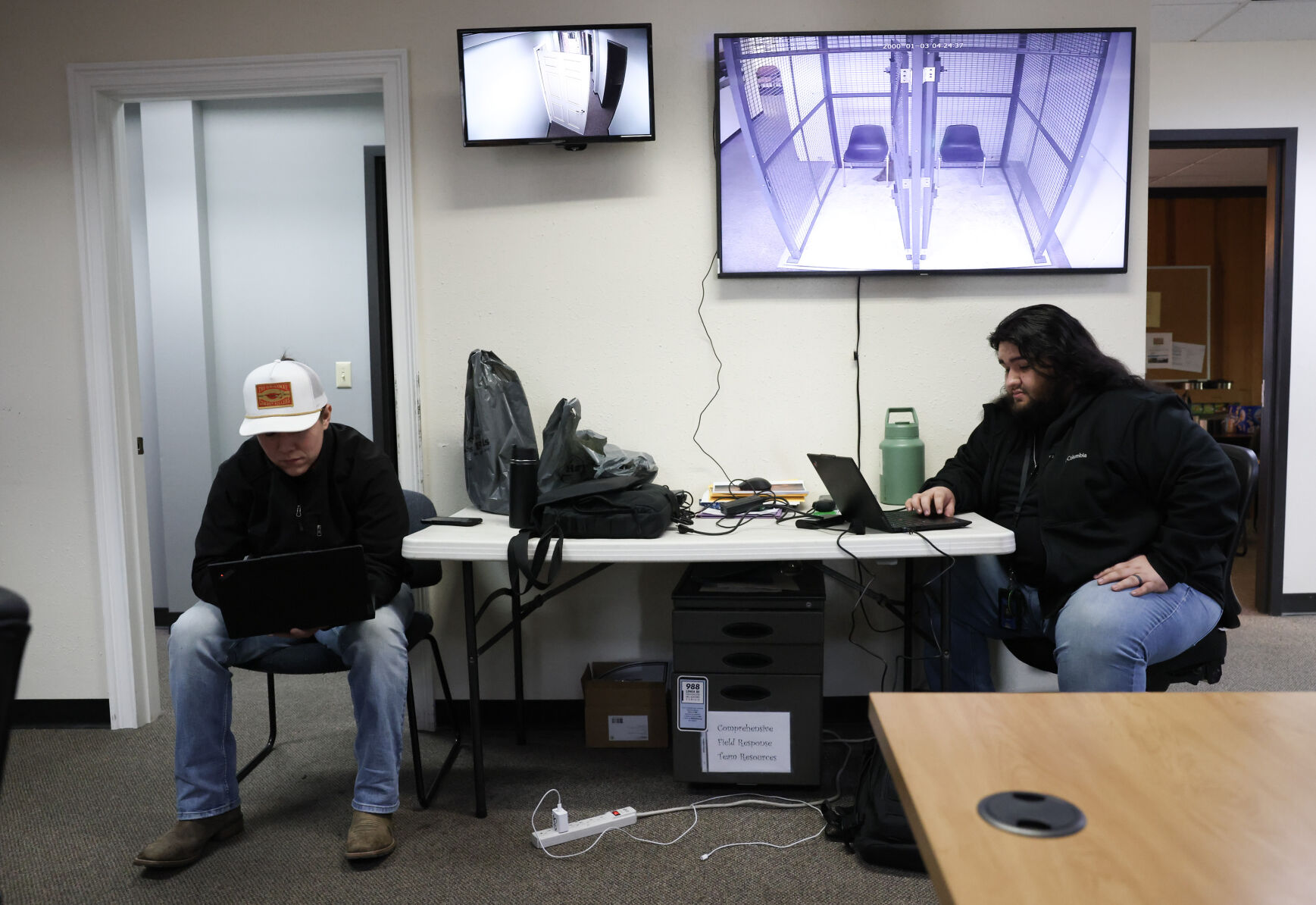
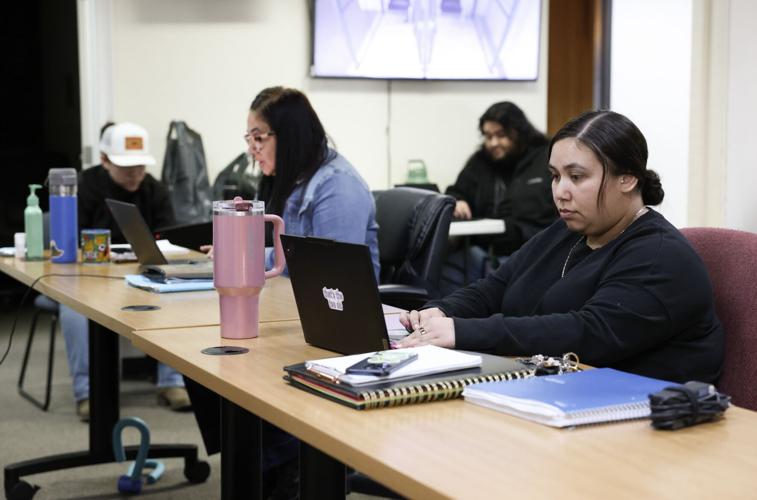
Crisis outreach professional Yolanda Solis, left, and crisis case manager Isaiah Cisneros, right, work on their computers Friday, March 13, 2026, at Yakima County Sheriff鈥檚 Office, in Yakima, Wash.
鈥淭here's not a lot of things that we had the options to do, but we'd spend a lot of time trying to figure out, 鈥楬ey, OK, can we call a friend? Can we call somebody else? Would you take a ride with me to Comprehensive mental health to talk to a counselor? Or would you want to go see your doctor or go to a treatment center, or go to Neighborhood Health?鈥� said Lt. Aaron Wuitschick, a special operations lieutenant with the Yakima County Sheriff鈥檚 Office.
Wuitschick said the initial co-response team was a valuable first step in addressing that problem聽鈥� but it came with its limitations. The program only had a handful of designated crisis responders, and because those professionals were required to ride along with law enforcement, they would sometimes end up stuck and need another agency vehicle to come pick them up to get to the next mental health call.
After the original funding expired, the program began receiving funding through the county鈥檚 0.1% mental health sales tax.
In November 2024, Comprehensive launched a new version of the program called the Field Response Team.
Program Manager Jenni Trevi帽o said the biggest difference is that behavioral health specialists now have their own fleet of vehicles and can respond to 911 calls on their own. The team is made up of four designated crisis responders, eight case managers and five peer support specialists stationed at the Sunnyside Police Department and the Yakima County Sheriff鈥檚 Office. They聽assist with calls from law enforcement throughout the 黑料福利社.
If there鈥檚 a safety concern, they can still have a law enforcement officer accompany them聽鈥� but Trevi帽o said having that as an option rather than a requirement for every call has increased flexibility across the board.
鈥淥ne of the biggest benefits is that we are freeing up other first responders聽鈥� so fire, EMS and law enforcement聽鈥� to be able to respond to calls that are maybe more appropriate for them,鈥� Trevi帽o said. 鈥淚nstead of having an officer respond to a call that we can take as a team and are the most appropriate to take, then we can handle that call.鈥�
The program has also served exponentially more people. In 2025, the Field Response Program provided more than 3,400 services to over 1,200 clients聽鈥� a 200% increase compared to the previous year, when Comprehensive Healthcare was operating a smaller co-response model.
Often, behavioral health crises are time consuming and law enforcement officers have other urgent聽calls. Rather than immediately having a client transported to the emergency department, the Field Response Team can work with the person to de-escalate, create a safety plan and evaluate whether hospitalization is necessary.
That extra time helps avoid unnecessary strains on law enforcement, emergency medical services and the hospital system.
鈥淥ne of the most valuable things for the department is definitely our time,鈥� Wuitschick said. 鈥淗aving a DCR program, it's a huge help, because now if we need to be there, we're there to do it and help make it safe until the DCRs can decide what they want to do. But at the same time, if they can go answer those calls or do via phone and handle those calls, it frees up our deputies to go out and handle the criminal calls or be proactive in the areas where we're having criminal issues.鈥�
A dynamic team
Brooklyn Porter is a case manager on the Field Response Team. She said one of the first things she does when she starts a shift is follow up on incidents from the previous day.
Often, that looks like calling clients to see how they鈥檙e doing and following up on their safety plan.
She鈥檚 also constantly monitoring the county鈥檚 computer-aided dispatch system as information about 911 calls comes in, keeping an eye out for any calls with a behavioral health component. At the sheriff鈥檚 office, the entries are displayed on a large TV screen near the entrance to the open space where the Field Response Team works. Porter said sometimes she鈥檒l see an entry and respond, and other times dispatch will reach out with a call and ask her to take it.
鈥淲e could respond to really any call聽鈥� a traffic stop, a welfare check, (emergency medical response) calls. All of them could be ours,鈥� she said. 鈥淏ut we're looking for any mention of suicidal thoughts, any mention of homicidal thoughts, delusions, statements that are weird or don't make sense to us.鈥�
The Field Response Team responds specifically to 911 calls, but people in crisis can also call the 988 crisis line to get support.聽The team has staff on call every day from 8 a.m. to 11:30 p.m. Their work is dynamic, and every member has a role to play.

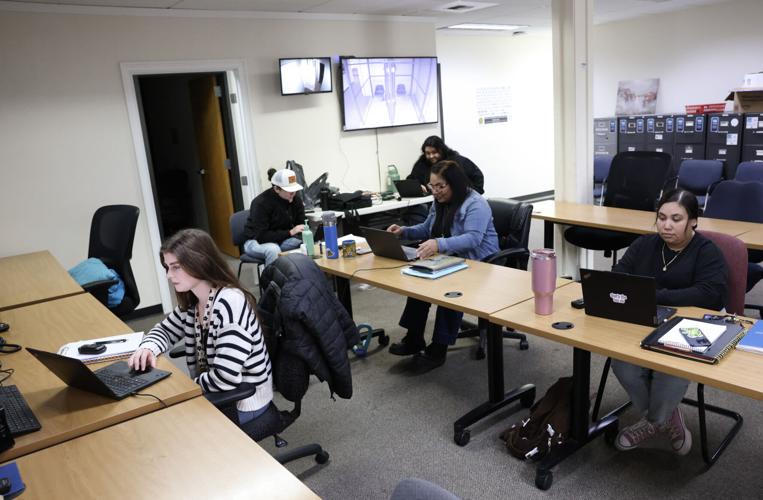
Comprehensive Healthcare鈥檚 Field Response Team, from left to right, Brooklyn Porter, Yolanda Solis, Isaiah Cisneros, Olga Romo and Monse Torres work on their computers Friday, March 13, 2026, at Yakima County Sheriff鈥檚 Office, in Yakima, Wash.
The team's peer support specialists are people who have experienced behavioral health disorders who support case managers and designated crisis responders. The peers have a non-clinical role, and聽help build trust and rapport with clients.聽
Case managers have bachelor鈥檚-level training and play a key role in monitoring calls and helping with crisis management and de-escalation. Designated crisis responders assist with the most serious聽calls and are able to make a judgment about whether someone needs to be hospitalized.
鈥淚 think it's rewarding when we're talking to people who, two years ago, wouldn't have had access to this service,鈥� Porter said. 鈥淭hey maybe would have called 911 and gotten law enforcement, and now they're getting us, and it's a more appropriate intervention to what their concern is.鈥�
Getting started
But the program is still young. As a new team, Trevi帽o said the group is constantly evaluating what鈥檚 working and what the program should look like in the future. Law enforcement, EMS and fire all have established processes, and integrating with emergency services was initially a challenge.
鈥淲e work with dispatch, we work with law enforcement, we work with AMR, we work with fire, we work with the hospitals," Porter said. "So we're not just working with other mental health professionals who are more similar to us. We've had to learn how to speak the language of every other department and service so that we all can work together."
Wuitschick said another consideration is physical space. The current setup at the sheriff's office consists of a few desks in the middle of an open room. If a case manager or designated crisis responder wants to bring a client in for an interview or to work with them in-person, the primary spaces available are the rooms the sheriff's office uses for investigations and interrogations聽鈥� which aren't necessarily set up to make someone with a mental health challenge feel comfortable. Wuitschick said he's hoping his office can find a better workspace for the team moving forward.聽
Romo said a broader lack of resources can also pose a challenge.
"We only have one (emergency department) and sometimes they're very full, or sometimes we just don't have enough beds," Romo said. "It's more of a systems issue, but that's difficult for me when they're at the hospital for an extended period of time and I can't get them out 鈥� but not because I don't want to, it's just out of my hands."
At the same time, she said one of the most rewarding parts of her job is working to advocate for her clients and ensure they're able to access the resources that are there.
As the partnership continues to evolve, Porter said she values the opportunity to work with people who need services and didn鈥檛 know another option was available.
鈥淭here can still be some stigma around crisis and contacting the crisis line and the hotline,鈥� Porter said. 鈥淲hen we meet new clients, I say, like, 鈥楨veryone needs our services at some point.鈥� If it's not you, it's your friend, it's your family member, it's your neighbor, it's a random person that you come across in the street. And it's OK to call us. It's OK to need our services.鈥�







(0) comments
Comments are now closed on this article.
Comments can only be made on article within the first 3 days of publication.