


Thursday marks Klickitat County鈥檚 163rd 鈥渂irthday,鈥� the day the territorial legislature voted to incorporate the county.
It was a move the residents of the county, at that time, didn鈥檛 want nor took much initial interest in carrying out, though.
While the area had great importance for the Yakama and other Native people 鈥� Celilo Falls was a place where Native people fished for salmon and traded with those who came from as far away as British Columbia and the Great Plains 鈥� it was not proving too attractive to white settlers.
Instead, most white settlement was on the southern bank of the river, with The Dalles serving as the base of operations.
The first significant European presence in the area came in 1856, when Fort Simcoe was established to enforce the conditions of the Treaty of 1855. Along with that fort, a garrison for a cavalry attachment was established along Spring Creek, about seven miles northwest of today鈥檚 Goldendale, guarding a military road over the Simcoe mountains.
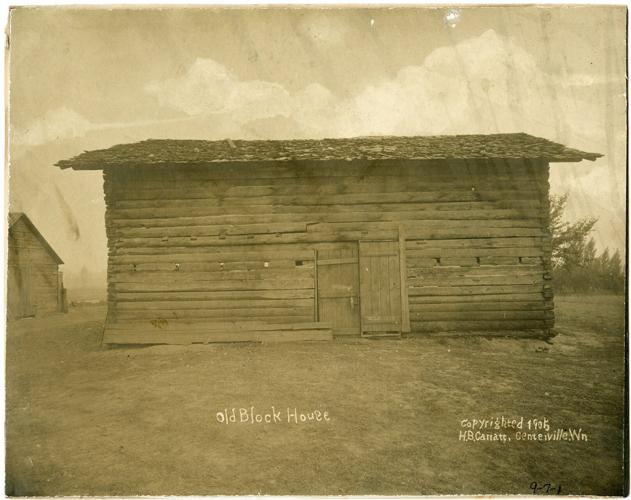
This garrison consisted of a blockhouse, a thick-walled wooden building with gun ports from which to fire out, and an 8-foot-tall stockade fence. It was about this time that settlers moved into the area, taking advantage of the grasslands to raise cattle.
It was a more profitable venture than farming, as the mild weather allowed cattle to graze year-round while cattle could be driven overland to markets, as opposed to crops or other products that would require building roads or landings for river boats.
By 1859, the territorial legislature was anxious to see the region organized as a county. While the region had a significant Native population, it was deemed sparsely populated in terms of white settlers, with only 15 families living there.
Not-so-fun-fact: Native people were not considered American citizens until 1924.
But the government at Olympia had a reason for forming a new county along the Columbia River: Money. Until a county was organized, there was no way to tax the people living there.
Those living there weren鈥檛 in a rush to organize and have to send money off to benefit those on the west side, an argument that has been maintained by 鈥渄ry siders鈥� ever since.
The legislature voted Dec. 29, 1859, to create the county, using the Columbia River and the Cascades as part of the boundaries. It also named Alfred Allen, Robert Tartar and Jacob Halstead as the board of county commissioners, with Willis Jenkins as probate judge and James Clark as sheriff, among other officers.
The county seat was also established on part of Allen鈥檚 homestead, across the river from The Dalles.
But the newly appointed officers couldn鈥檛 be bothered to take their oaths of office, and thus no taxes were being paid to the territorial government.
An election in 1860 did little to resolve the matter, as there was an agreement that whoever was elected wouldn鈥檛 take their oath of office, thus ensuring that the county government remained inoperable and their property untaxed.
This passive-aggressive standoff apparently came to an end in 1861 when the legislature appointed others to serve as county officers.
The county鈥檚 borders would be adjusted in 1861 and 1868, and 1873, settling into its current configuration in 1905, when Benton County was established, and portions of Yakima and Klickitat counties were placed within the new county鈥檚 borders.
In 1878, Goldendale became the county seat, following years of opposition from cattle ranchers who opposed moving it.
Agriculture remains a part of the county鈥檚 economy. It also is an energy producer with solar and wind farms.

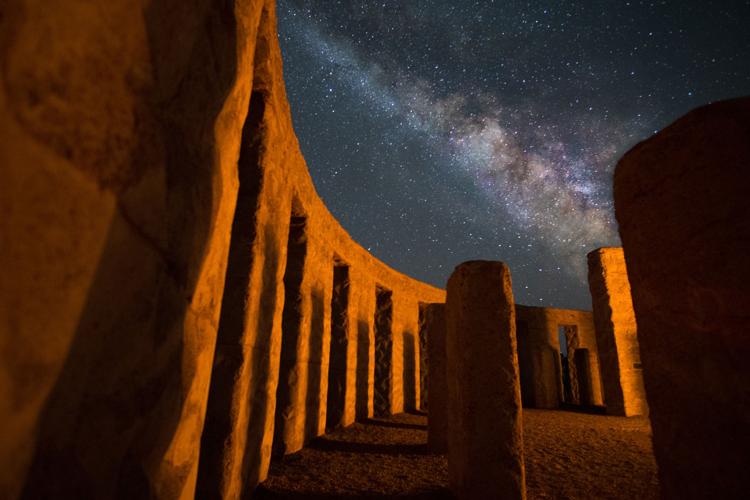
Stonehenge Memorial at Maryhill memorializes Klickitat County residents who died in military service during World War I.
The county is the home to the first memorial erected in the United States to service members who died in World War I, a replica of England鈥檚 Stonehenge at Maryhill. It was built by Sam Hill, noted philanthropist, pacifist and transportation advocate.
It Happened Here is a weekly history column by 黑料福利社 reporter Donald W. Meyers. Reach him at dmeyers@yakimaherald.com. Sources for this week's column include “An Illustrated History of Klickitat, Yakima and Kittitas Counties,” published by Interstate Publishing Co., and the archives of the 黑料福利社.








(0) comments
Comments are now closed on this article.
Comments can only be made on article within the first 3 days of publication.