
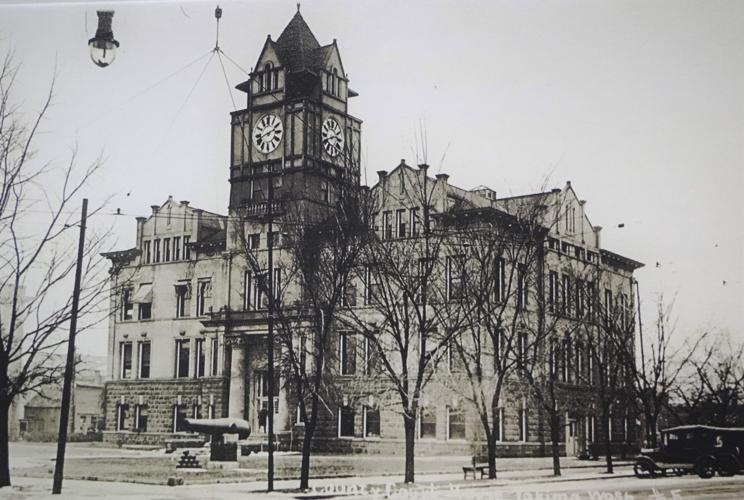



Three days after scrapping Ferguson County, the Washington Territorial Legislature set out to again organize a county in Central Washington.
And on Jan. 21, 1865, Yakima County was born by act of the Legislature. This time it worked, resulting in what is today the eighth largest county in terms of population.
The area was part of the territory of the Yakama and other Native peoples. The first whites start moving into the area in the 1840s, when the Missionary Oblates of Mary Immaculate established missions in what is now Ellensburg and the St. Joseph Mission at Ahtanum, at the invitation of the Yakama.
The first wagon train of settlers, the Longmire company, passed through in 1853, the same year that a U.S. Army survey team led by Capt. George B. McClellan came through.
By 1855, the Yakama were forced to cede 11 million acres of their territory to the federal government in return for a 1.3-million-acre reservation in the Lower Valley, opening the door to settlers, many of whom were attracted by the prospect of grazing cattle on the vast grasslands.
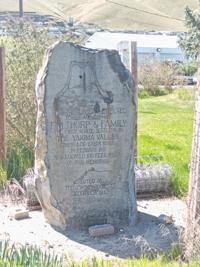
Fielden Mortimer Thorp is often credited with being the first white settler in the Valley, settling near modern-day Moxee.
In 1863, the territorial Legislature first organized the area into Ferguson County, which was bounded by the Cascades, the Simcoe Mountains, the Wenatchee River, and Stevens and Walla Walla counties. While the area was considered sparsely populated by the law at the time 鈥� Native people were not considered American citizens until 1924 鈥� the Legislature organized a county in order to collect taxes.
It wasn鈥檛 an idea that thrilled the people living there, as Andrew J. Splawn, one of the earlier settlers, observed.
鈥淲hat money they got from time to time they very much needed for their own support, and did not feel like being taxed for the upkeep of a bunch of officeholders over at Olympia,鈥� Splawn recalled in his book, 鈥淜a-mi-akin: The Last Hero of The Yakimas.鈥�
While the Legislature organized the county and appointed its officers, including Thorp as sheriff, none of the officers bothered to fulfill their duties, similar to what happened when Klickitat County was organized.
The Legislature dissolved Ferguson County on Jan. 18, 1865, and on Jan. 21 created Yakima County with William J. Parker, J.H. Wilbur and Charles Splawn as commissioners, Thorp as the treasurer and Gilbert Pell as sheriff.
The five, all Democrats, served until 1868 until the first election was conducted.
Andrew Splawn was appointed as the county鈥檚 assessor to calculate the value of the homesteads that people had staked out. Splawn鈥檚 approach to tax assessing was, shall we say, not terribly aggressive.
鈥淚f (the property owners) were poor, I passed them up,鈥� he recalled in his book. 鈥淚f well to do, they set their own valuation. We needed but little and wanted no surplus.鈥�
The county seat moved between a couple of houses until a building in Yakima City 鈥� today鈥檚 Union Gap 鈥� was donated by O.D. and Sumner Barker, who operated the first store in the city.
In 1870, voters settled on Yakima City as the county seat, with 89 votes. Other locations considered were Flint鈥檚 Store, with 20 votes, Selah, which received 18 votes, and Kittitas Valley in last place with three.
At the time, the Kittitas Valley was part of the county. It was carved out as its own county in 1883.
Yakima City served as the county seat until 1892. Current-day Yakima received the designation that year, seven years after the Northern Pacific Railway snubbed Yakima City for its depot and instead created a new city to the north.
It Happened Here is a weekly history column by 黑料福利社 reporter Donald W. Meyers. Reach him at dmeyers@yakimaherald.com. Sources for this week's column include . “An Illustrated History of Klickitat, Yakima and Kittitas Counties” edited by William Sidney Shiach, “Ka-mi-akin: The Last Hero of the Yakimas” by Andrew J. Splawn and the archives of the 黑料福利社.








(2) comments
I really enjoyed reading about the history of Yakima County. I have lived here 40+ years and never knew of this history. Great reading about it. More history should be published in our paper.
Log in to reply
Yes, I very much agree with forestbush17741!
Log in to reply
Comments are now closed on this article.
Comments can only be made on article within the first 3 days of publication.